Brick, Stone or Timber: What a Regional Building Material Can Tell You
Regional building materials reveal how local resources, building uses and upkeep shape a place’s buildings, without reducing architecture to a single identity.
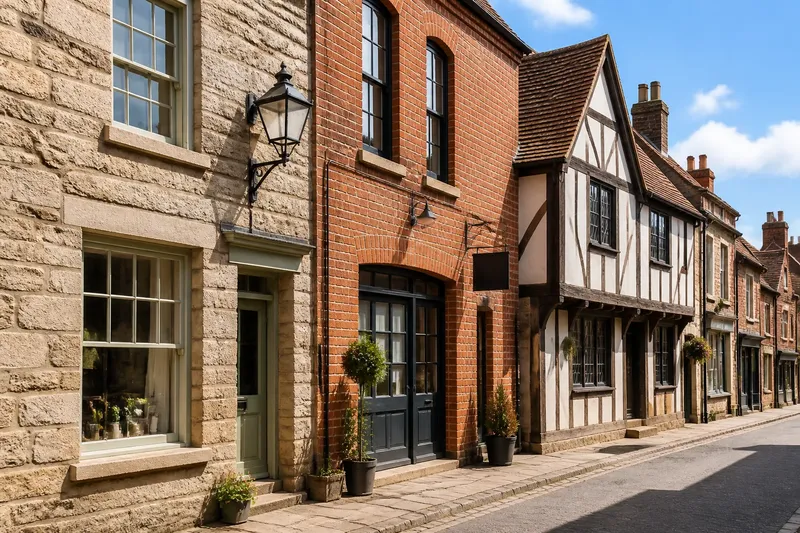
Why does one village have pale stone cottages while the next has brick terraces or timber-framed halls? Regional building materials offer clues about local resources, construction needs and habits of repair. They do not provide a simple code for identifying a community. A wall reflects choices made by builders and owners within particular practical limits.
Start with the material
Brick, stone and timber are broad categories, not single, uniform substances. Their colour, texture and working properties vary. A sandstone from one district may split into manageable blocks, while another stone nearby is harder to shape. Clay can fire to different shades according to its composition and the kiln conditions. Timber varies by species, grain and the size of trees available.
These differences affect more than appearance. Builders consider whether a material can bear weight, resist damp, be cut or joined with available tools, and be moved to the site. The choice also depends on what local craftspeople know how to work with and what buyers can obtain. A building’s visible surface may therefore point towards a supply chain as much as a geological feature.
Look closely at the material before assigning it a regional meaning. Check whether the wall is made from blocks, small stones, bricks or a timber frame with infill. Notice whether the surface is dressed, rough, painted, rendered or left exposed. Those details reveal how the material was prepared and presented.
Trace the supply
Local stone can be convenient when a quarry lies near a building site, but proximity alone does not explain every stone wall. Stone may have travelled along a river or road, arrived as ballast or been reused from an older structure. Brick production likewise depends on suitable clay, fuel, kilns and a market for the finished units. Timber might come from nearby woodland or arrive through a wider trade network.
Transport changes which materials make economic sense. Heavy stone is awkward to move over difficult ground, while water routes can make distant supplies more accessible. Brick is made in regular units, which can suit repetitive construction, but its production requires a prepared clay source and firing. Timber can be shaped and joined in ways that suit a frame, yet large pieces may be scarce or costly where woodland is limited.
A building’s material palette can preserve traces of these routes. Look for a contrast between a local foundation and a finer imported facing, or between an older stone core and a later brick addition. Such combinations can show that access, fashion or building needs changed over time. They do not, on their own, identify the people who commissioned the work.
Read the building’s purpose
Materials also respond to use. A barn, shop, cottage and public hall ask different things of their walls and roofs. A broad timber frame may make space for a large interior. Brick can suit repeated units in a row of houses. Stone may be chosen for a building expected to endure hard use, or simply because it is the familiar material available to local masons.
Construction techniques help explain what a material was doing. In timber framing, the structural frame carries much of the load, while panels fill the gaps. In solid masonry, the wall itself may bear the weight above. A brick façade can conceal other materials behind it, so the visible surface does not always describe the whole structure.
Imagine a fictional market town where a narrow street contains a stone shop beside a brick workshop. If the shop has thick masonry around a small interior and the workshop has broad openings for moving goods, the difference may reflect use as much as local taste. The observable result is a varied street, not a tidy division between two regional identities.
Weather and upkeep
Rain, wind, frost and sun influence how materials age and how owners maintain them. Water can enter joints, collect on ledges or expose weak points around openings. Timber may need protective finishes, while masonry joints can require attention if they become damaged. A roof’s overhang, drainage and detailing often matter as much as the wall material beneath it.
Repairs can alter a building’s appearance without changing its basic form. A stone wall may have brick patches; a timber frame may be covered by render; a brick façade may receive a later coating. These changes can result from available materials, changing expectations about comfort or appearance, or a response to deterioration. A patch is evidence of repair, but not necessarily evidence of neglect or a distinctive local custom.
For a building you are examining, compare sheltered and exposed areas. Differences in colour or surface may reflect weathering, cleaning or replacement. If you are responsible for repair work, use the building’s existing materials and seek advice from a conservation professional where appropriate. Product labels, manufacturer instructions and local rules matter for repair choices.
What can a material tell you?
Does local stone mean the stone came from nearby?
Not necessarily: a familiar stone may have been transported, reused or selected for its appearance. Quarry marks, changes in stone type and the building’s setting can offer clues, but the wall alone may not settle the question.
Why do neighbouring buildings use different materials?
Owners may have built at different times, had different budgets or needed spaces for different purposes. New transport links and changing construction methods can also make a formerly uncommon material easier to obtain.
Can brick or timber identify a region?
These materials can be characteristic of a place, especially when paired with recurring construction details. But similar resources and techniques occur across regional boundaries, so material is one clue among several rather than a reliable identity label.
What should I inspect first?
Begin with the wall’s construction, the condition of its joints and the way it meets the roof, windows and ground. Then compare those details with nearby buildings, noting both shared features and later alterations.
Read patterns, not labels
A regional building tradition is often visible in repeated choices: familiar brick bonds, characteristic stonework, a common timber-frame arrangement or a customary way to finish a wall. Those patterns matter because they connect materials with skills and building purposes. Yet they can travel, change and overlap. A boundary on a map rarely marks a sudden change in every quarry, workshop or building habit.
When looking at a street, ask three questions: what is the building made from, what does its construction suggest about its use, and what signs show how it has been maintained? Compare the answers across several buildings rather than treating one façade as a complete portrait of a place. That approach makes regional building materials more informative: they reveal practical choices and shared skills while leaving room for trade, change and individual decisions.
Regional building materials are most useful as evidence of relationships between resources, work and upkeep. The next time a wall catches your eye, look for the joints, repairs and transitions around it; those small details often explain more than the material name alone.