The Folklore Trap: Why a Custom Rarely Has One Origin
Learn why a custom rarely has one origin, and use clear questions to describe how a tradition changes across families, places and generations.
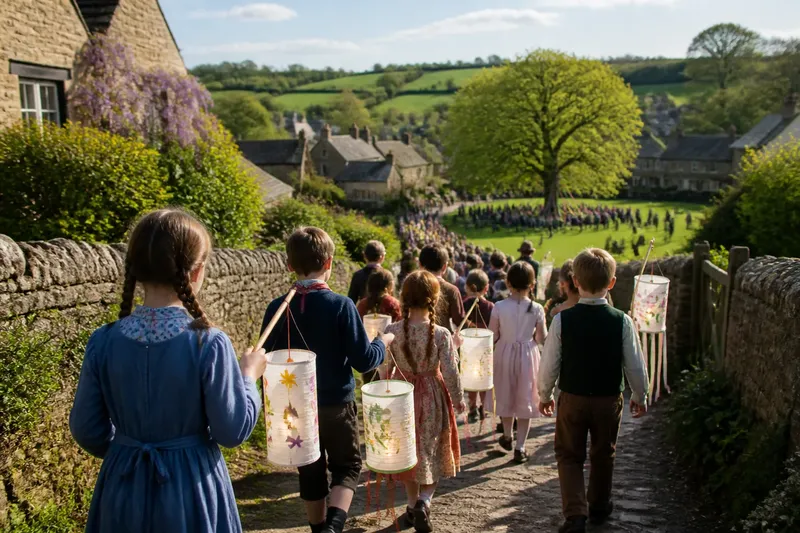
Where did this custom begin? Ask about a local procession, seasonal game or household ritual, and someone may name a village, a family or a celebrated event. The answer can be a useful lead, but a tradition rarely has one origin in the sense of a single moment that explains everything people do now. Its name, actions, meaning and route between communities may have different histories.
That distinction matters when describing regional culture. Instead of forcing a custom into a tidy birthplace story, ask what evidence supports each part of its history and how people have reshaped it. These questions help keep an account specific without pretending that uncertainty means nothing can be known.
1. What counts as the custom?
Before asking where a tradition began, decide what you mean by the tradition. A custom can be a repeated action, such as carrying a lantern, but it may also include a particular song, costume, date, route or explanation for why the action matters. Those parts do not have to share an origin.
It helps to describe the practice in observable terms first. Who takes part? What do they do? Where and when does it happen? What objects, words or roles are involved? A broad label such as “the spring custom” may cover several local versions that share a name but differ in important details.
Say you are describing a fictional village procession in which children carry paper lanterns to a green. The lanterns, the gathering place and the choice of participants may each have separate explanations. Calling all three an ancient custom would blur the very differences a reader needs to understand.
2. Which layer has a beginning?
Traditions are often bundles of layers. A practice may draw on a seasonal activity, acquire a religious or civic meaning, and later take on a form suited to a school, club or town festival. The current version can be meaningful even if some of its parts are comparatively recent.
Ask which element a claimed origin refers to. Is it the first known performance, the earliest use of a name, the appearance of a particular object, or the moment a community adopted the practice? These are different claims. A story about when a procession began, for example, does not automatically date its tune or explain why people now follow a particular route.
Use precise wording to keep the layers apart: “The lantern procession is associated locally with the spring gathering” says less than “The procession began as an ancient fertility rite”, but it may say more that can be supported. Distinguish a tradition’s present meaning from claims about its earliest form.
3. What kind of evidence?
Evidence can illuminate different parts of a custom, and each source has limits. A dated programme may show that an event took place by a certain time. A family account may describe how one household remembers it. A local name may offer a clue about language or use, but it cannot by itself establish the full history of a ritual.
Look for the connection between a source and the claim being made. A photograph can document clothing or a gathering, yet it may not explain what participants believed. A written description can record an explanation, but the writer might have misunderstood a local term or chosen details that suited an outside audience.
Useful questions include:
- What exactly does this source record: an action, a name, an explanation or a memory?
- Who made or passed on the account, and what might they have been able to observe?
- Does another kind of evidence support the same detail?
- Is the source describing the custom as it was then, or offering a later account of its past?
When the evidence is uneven, make the claim narrower rather than filling the gap with a confident story.
4. Whose memory is represented?
A community is not a single storyteller. Older residents, newcomers, organisers, performers, children and people who no longer attend may remember or interpret a custom differently. One account may describe a family practice; another may emphasise the public event. Neither automatically speaks for everyone.
Ask who gets to explain the tradition and whose experience is missing. A printed account from an organising committee might tell you how an event was presented to visitors, while a participant’s recollection may centre on preparation at home. Both offer insight, but they answer different questions.
Memory also changes as people retell it. A family may preserve a vivid story about a grandparent’s role while forgetting earlier variations. That does not make the story worthless. It means it is strongest as evidence of how the family understands its connection to the custom, rather than as proof of the custom’s first appearance.
5. How did it travel?
Regional customs rarely respect neat boundaries. People move for work, marriage, education or trade; visitors carry songs and habits home; neighbouring communities borrow and adapt. Similarity between two places can point to contact, shared circumstances or independent invention. Similarity alone cannot tell you which explanation is right.
Ask what might have moved between communities and what changed after it arrived. Was it a tune, a name, a ritual object or a calendar date? Did local materials, beliefs or public rules alter the practice? A tradition can travel without remaining identical, and a local version need not be a faded copy of a supposedly original one.
For the fictional lantern procession, a neighbouring village might also carry lights but use them in a different season and for a different purpose. That resemblance invites a closer comparison: which details match, which differ, and what connections between residents could help explain the overlap? It does not settle the question by itself.
6. What changed, and why?
A custom’s history includes changes, not just beginnings. Ask whether the event paused, moved location, altered its participants or gained a new public role. Changes may follow practical circumstances, shifts in local authority, changes in available materials or a decision by organisers. A change can become part of the tradition rather than evidence that the tradition has ended.
Be alert to the word “revival”. It can describe a real return after a break, but it may also suggest that an older form has been restored exactly. Often organisers are selecting from memories and records, then making choices for present-day participants. Describe what was resumed and what was newly arranged, rather than treating revival as a return to an untouched past.
For a clear account, place claims in sequence only where the evidence permits: an event is recorded, a practice changes, participants explain the change, and a later version takes shape. If the timing or reason is unclear, say so plainly instead of supplying a neat cause.
7. What do local words mean?
Names can shape the origin story. A word may be old while the practice attached to it is newer, or a familiar name may have been applied later to activities that once went by several names. Etymology—the study of word histories—can offer useful clues, but a word’s age does not settle the age of the custom.
Record how participants use the name, including local pronunciations or alternate terms when they matter. Ask whether the name refers to the whole event, one object, a song or a particular role. If an older word has several possible meanings, avoid presenting one interpretation as certain unless evidence supports it.
This is especially useful when neighbouring communities use the same word differently. The shared term may point to a connection, but the differences in meaning can show how each place has made the custom its own.
Questions about origins?
Does a written record prove a custom began then?
It proves, at most, that the custom or a described part of it was recorded by that point. The practice may have existed earlier without being documented, and the record may describe only one local version.
Can a tradition have several origins?
Different elements can come from different sources, and a practice can develop through borrowing and local adaptation. It is often more accurate to describe those strands than to name one birthplace for the whole custom.
How should I describe a disputed origin story?
Say who tells the story and what part of the custom it explains. Then distinguish that account from what records or other evidence can establish, without dismissing the story’s value to participants.
Is a new version still a tradition?
It can be, if people recognise and repeat it as part of their shared practice. Traditions continue through use and interpretation; they do not need to remain unchanged to matter.
Describe the evidence
A careful account does not need to solve every uncertainty. It can name the practice, separate its components, identify who remembers or records each detail, and show where versions differ. When evidence supports only an association or a date by which something was recorded, say that rather than claiming a definitive beginning.
For anyone writing about local customs, the most useful question is not simply “Where did it start?” Ask instead: which part, according to whom, and on what evidence? That wording makes a folklore history more trustworthy and leaves room for the people who continue to shape it.